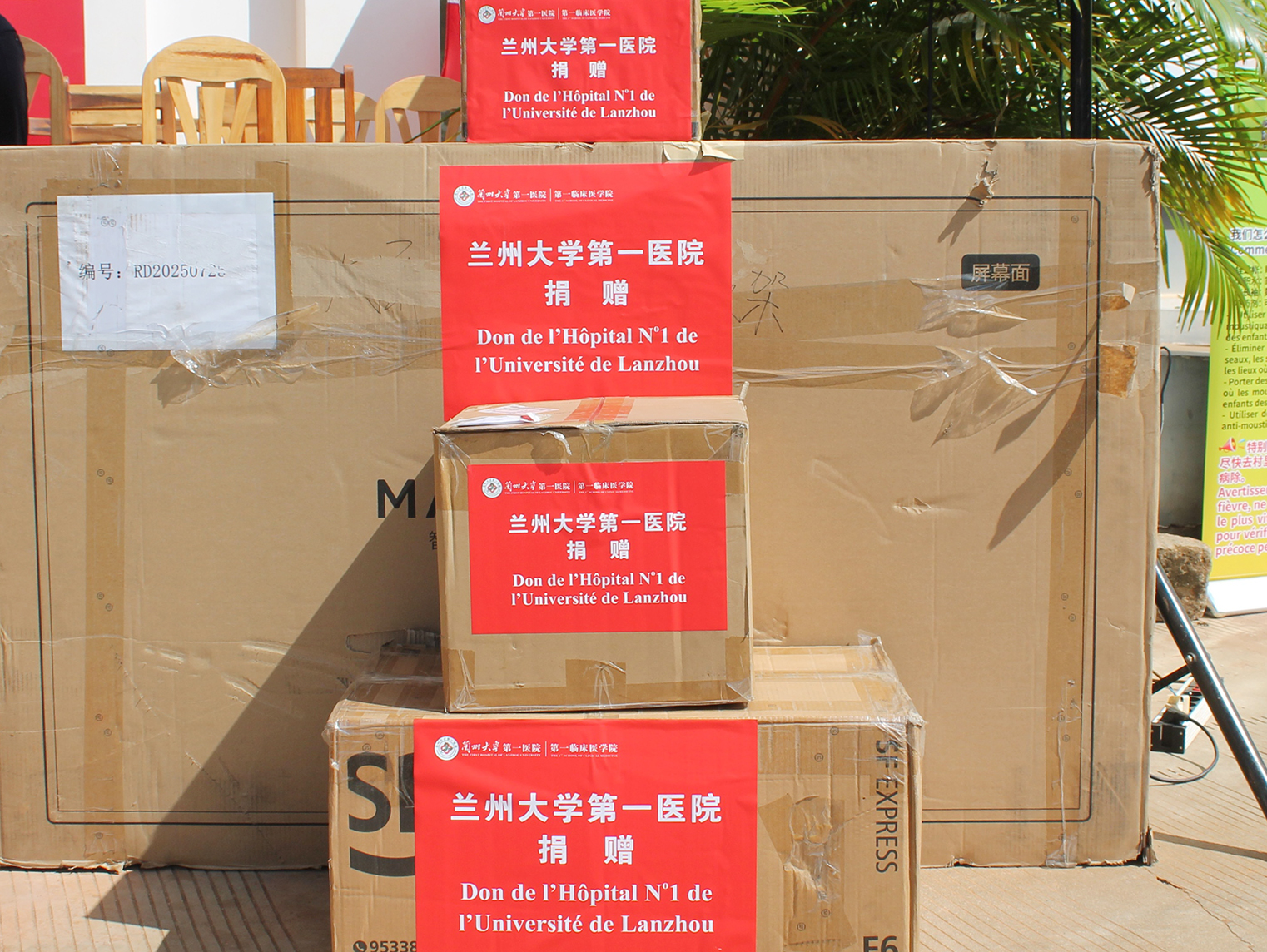
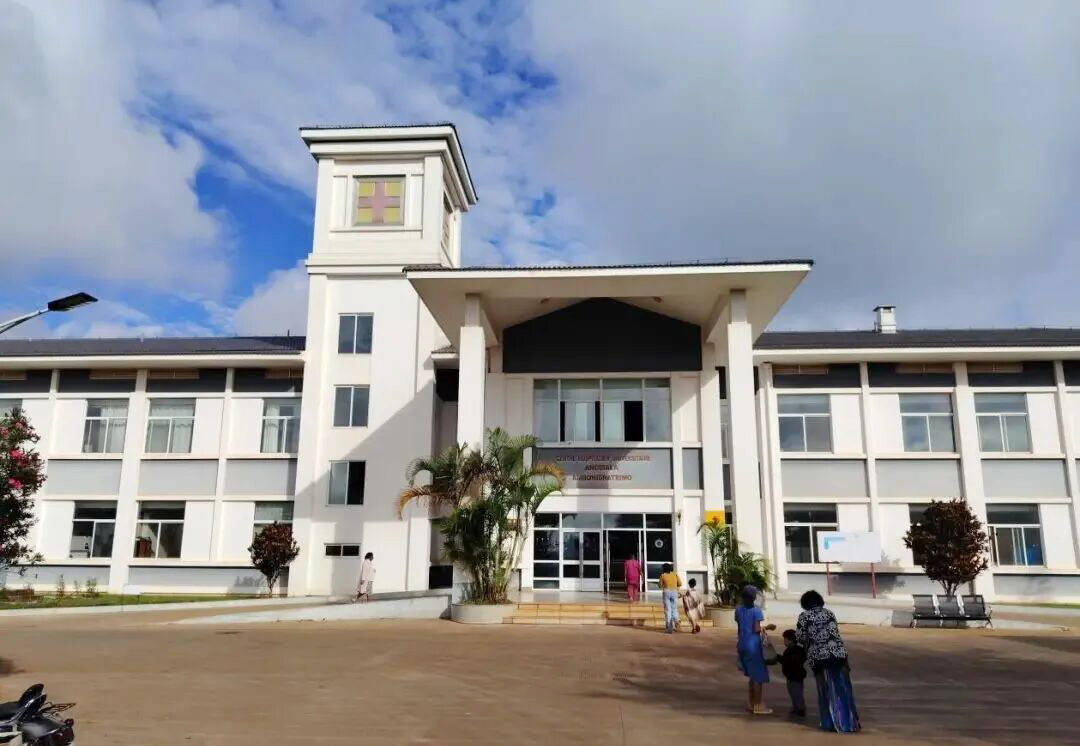
Recently, a digital radiography (DR) system donated and guided for installation by the First Hospital of Lanzhou University(LZUFH) was officially put into use at Centre Hospitalier Univercitaire d’Anosiala of Madagascar. This equipment is the first digital radiography system in the Ambohidratsimo region of Madagascar. Since its commissioning, it has been operating stably, effectively improving the conditions for imaging diagnostic.
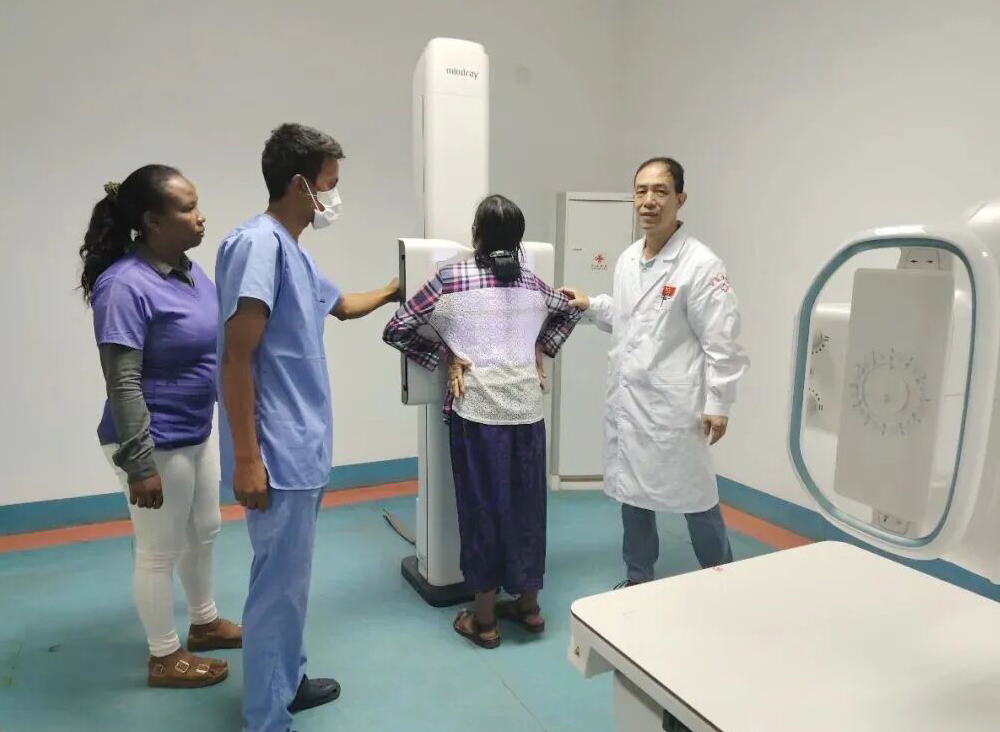
Previously, Centre Hospitalier Univercitaire d’Anosiala of Madagascar and surrounding areas were limited by traditional X-ray equipment, which suffered from slow imaging speeds and low clarity. Many occult lesions were difficult to detect in a timely manner, forcing patients to travel hundreds of kilometers to the provincial capital for medical care, resulting in high diagnosis and treatment costs and a heavy burden on patients. This long-standing problem has now been fundamentally resolved. The newly installed DR equipment is a new-generation digital medical imaging device with fully independent intellectual property rights from China. The imaging speed is only 1-3 seconds, significantly reducing patient waiting time; the radiation dose is only 30%-50% of that of traditional X-ray films, greatly lowering the radiation exposure risk for patients and substantially improving diagnostic and treatment safety.
According to Dr. Cao Jiuhu, an imaging expert with the 24th Chinese Medical Team to Madagascar, since the equipment was put into use, it has successfully completed imaging diagnoses for multiple complex cases, including tuberculosis screening and scoliosis assessment, providing reliable evidence for precise clinical diagnosis and treatment. The introduction of this equipment marks the entry of the radiology department of Centre Hospitalier Univercitaire d’Anosiala into a “filmless” era, effectively enhancing the hospital’s imaging diagnostic capacity in Madagascar’s public health sector.
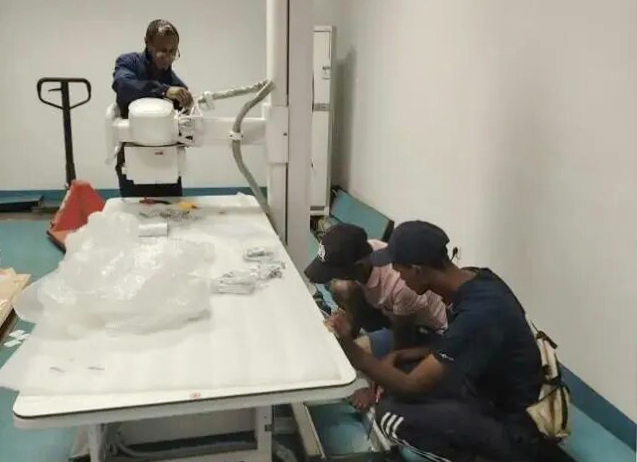
To ensure the stable operation of the equipment in an environment with unstable power supply, high temperatures, and high humidity, LZUFH coordinated repeatedly online with the Malagasy side before the equipment arrived, optimizing floor load-bearing renovations and power adaptation solutions. After the equipment arrived, an expert team from LZUFH, together with members of the Chinese medical team, medical technologists from Centre Hospitalier Univercitaire d’Anosiala , and equipment engineers, jointly completed the installation and commissioning. Every step—from setting up dustproof and moisture-proof facilities to network cabling and layout—was carried out with precise measurement and standardized procedures to ensure the equipment adapted to local environmental conditions.
At the same time, LZUFH implemented a full-chain assistance model of “equipment + training + quality control.” Wang Gang, Director of the Radiology Department of LZUFH, worked closely with the 24th Chinese Medical Team to Madagascar, providing hands-on training to Malagasy technicians on equipment operation. Drawing on China's mature experience and quality control systems, they also assisted Centre Hospitalier Univercitaire d’Anosiala of Madagascar in developing standardized procedures and quality control standards for DR examinations tailored to local conditions, achieving the leap from moving beyond donating equipment to transferring knowledge and skills.
The head of the radiology department at Centre Hospitalier Univercitaire d’Anosiala of Madagascar said, “The Chinese doctors have not only brought us advanced diagnostic and treatment equipment but also taught us how to operate and maintain it. The teleconsultation interface of this system allows us to receive technical guidance from Chinese experts at any time in the future. Patients can now receive precise diagnosis and treatment right on their doorstep. We are truly grateful!”
Edited by the Office of Foreign Affairs