Recently, the European Congress of Radiology (ECR 2026) was held in Vienna, Austria. As one of the most influential academic conferences in the global radiology community, this year's congress brought together leading experts and scholars from around the world. The radiology team from the First Hospital of Lanzhou University (LZUFH) had 14 research studies selected for presentation at the congress, including two oral presentations that drew significant attention from attending experts.
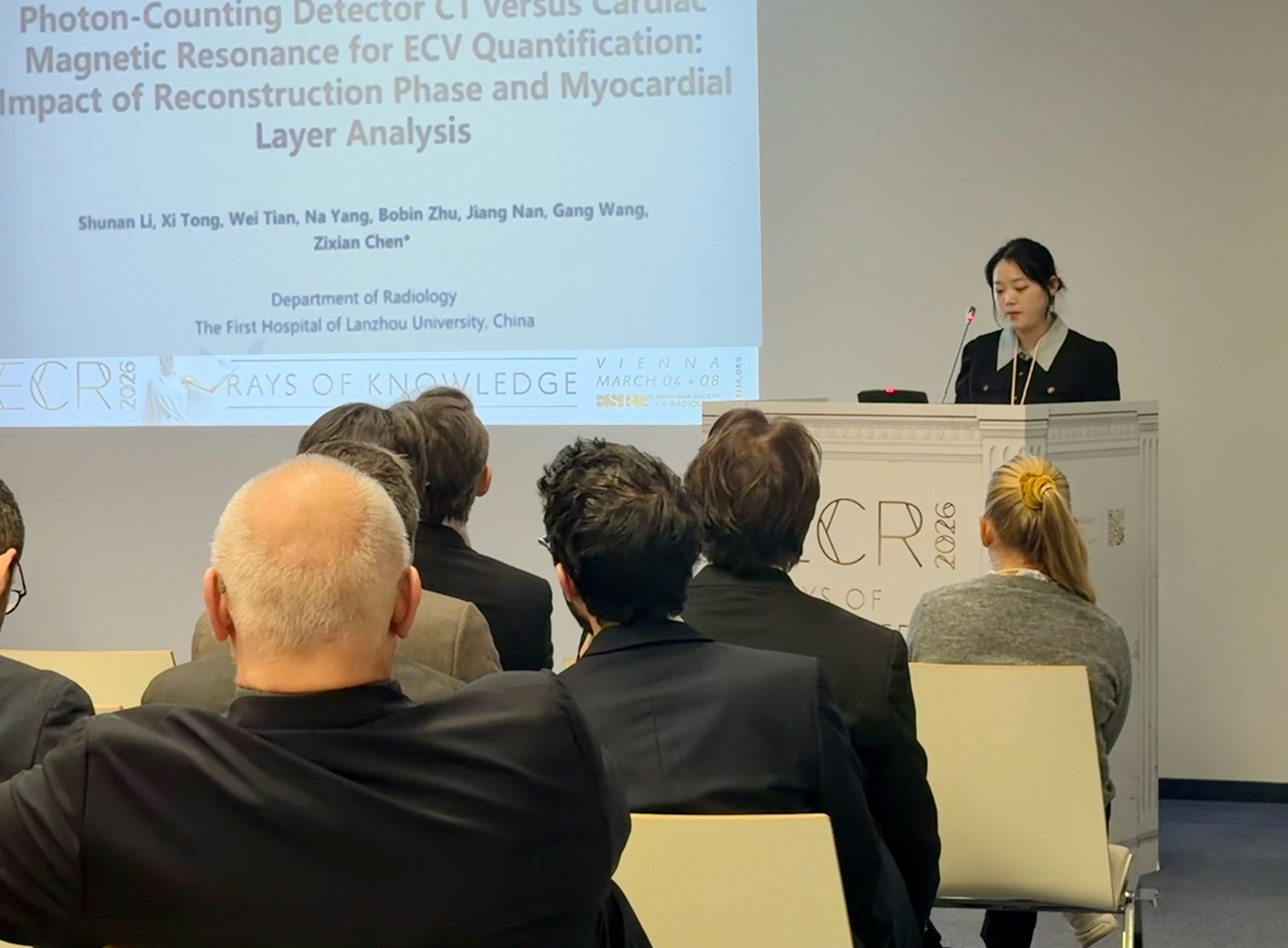
Master's student Li Shunan presented on behalf of the team an oral report titled "Photon-Counting Detector CT versus Cardiac Magnetic Resonance for ECV Quantification: Impact of Reconstruction Phase and Myocardial Layer Analysis." This study utilized photon-counting detector CT, with cardiac magnetic resonance (CMR) as the reference standard, to systematically explore its value in the quantitative assessment of myocardial extracellular volume (ECV). This prospective exploratory study filled a gap in the application of photon-counting CT in cardiovascular imaging in Gansu Province, providing a new imaging tool for the noninvasive assessment of myocardial diseases and garnering attention from attending experts.
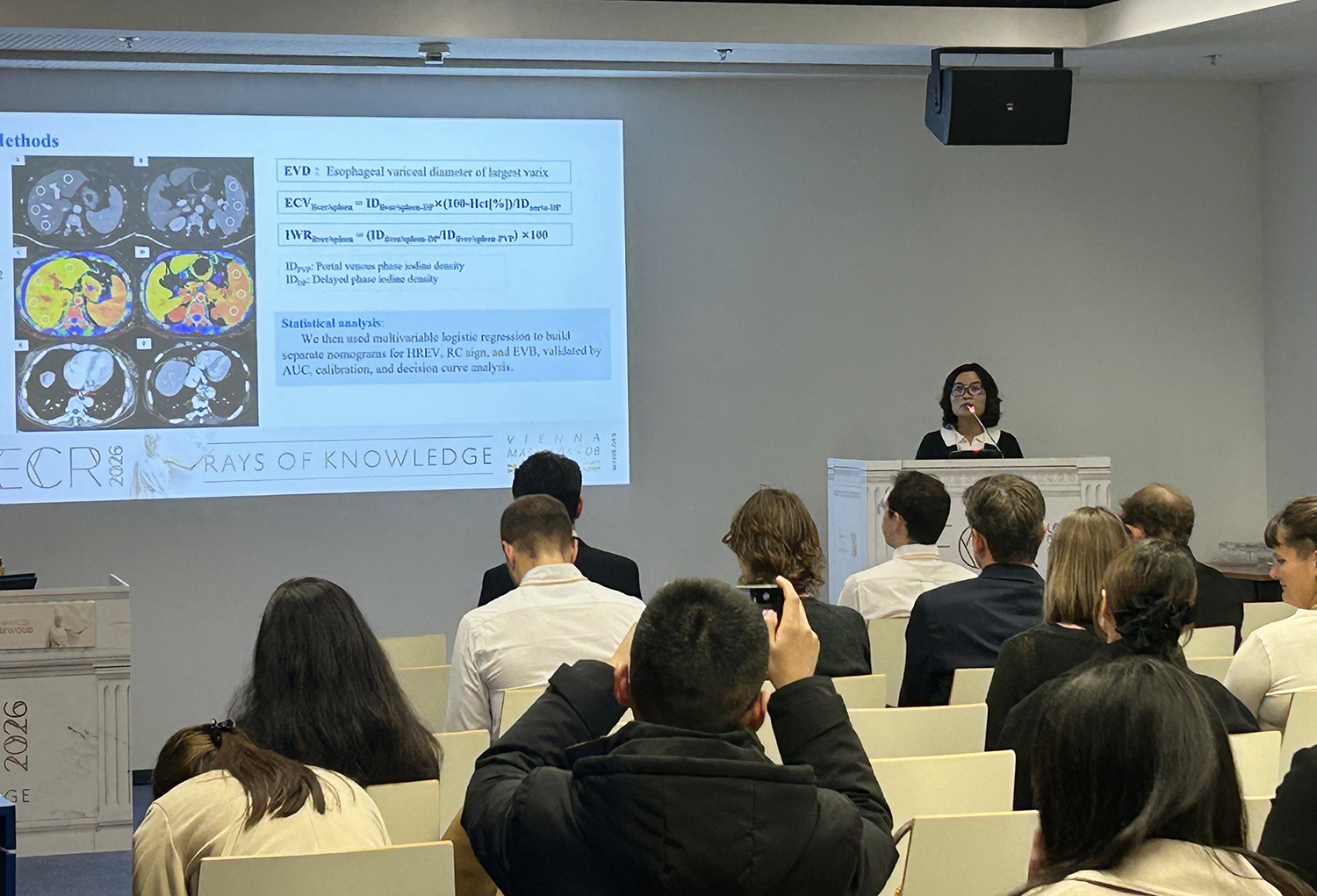
Dr. Li Jinkui presented an oral report titled "A Dual-layer Spectral Nomogram Integrating Structural, Functional and Morphological Parameters for Risk Stratification of Esophageal Varices in Cirrhosis." This study demonstrated an innovative approach to risk stratification of esophageal varices in cirrhosis using multiparameter CT. The study developed a multiparameter combined model based on dual-layer detector spectral CT, integrating structural, functional, and morphological indicators, which improved the predictive efficacy for esophageal variceal bleeding and provided strong support for precise clinical decision-making.
In addition, the radiology team presented several other research studies at ECR 2026, covering innovative topics such as radiomics in hepatocellular carcinoma, prediction of gene mutations, imaging assessment of marathon runners, imaging-based prediction of Ki-67 expression in breast cancer, coronary MRA imaging, and photon-counting CT multiphase angiography. These studies spanned multiple fields, including abdominal imaging, cardiovascular imaging, oncology, and neuroimaging.
In 2025, the first photon-counting detector CT in Gansu Province was officially put into clinical use at LZUFH. The radiology team's presentation of photon-counting CT research findings at ECR demonstrated the department's research capabilities supported by advanced equipment platforms.
Edited by the Office of Foreign Affairs